What Is an Organ Transplant?
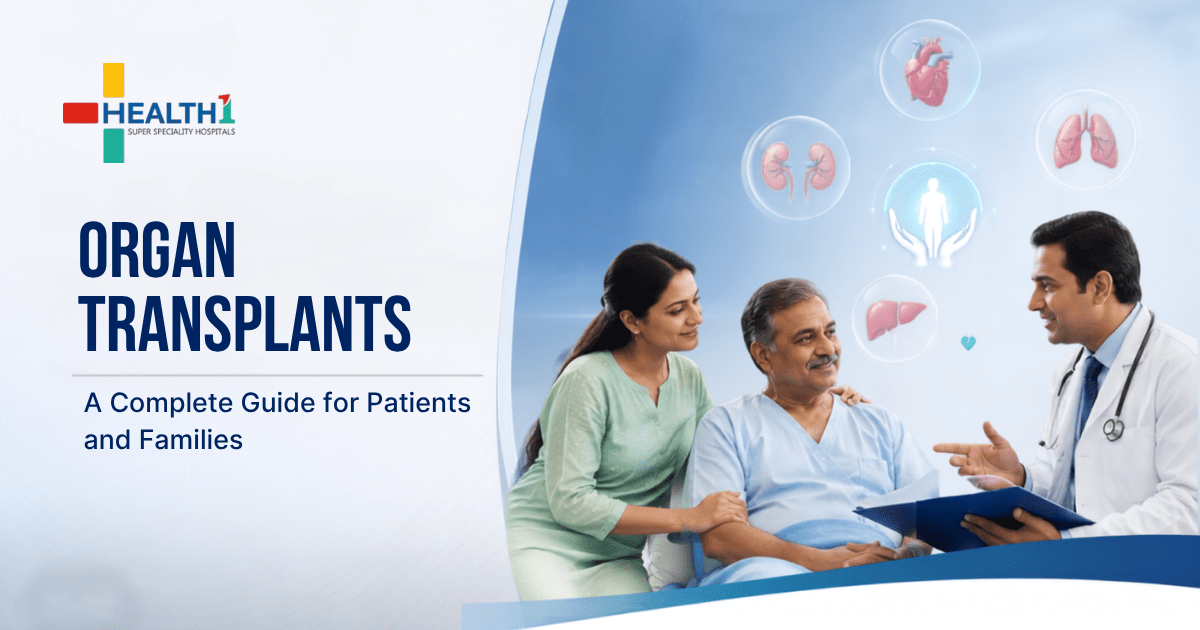
An organ transplant is a surgical procedure in which a damaged or failing organ is removed and replaced with a healthy organ from a donor. The person who provides the organ is the donor; the person who receives it is the recipient.
A transplant is offered when other medical treatments are no longer effective and the organ can no longer sustain life. India performs thousands of organ transplants every year, and awareness about organ donation continues to grow. All transplants in India are governed by the Transplantation of Human Organs and Tissues Act, 1994 (THOTA), which ensures legal and ethical standards are maintained throughout the process.
Patients and families in Gujarat often ask where to find reliable, experienced transplant care. Ahmedabad is home to several centres equipped for complex transplant surgeries, and Health1 is among those committed to internationally aligned standards of care. Health1 Ahmedabad’s transplant specialists bring decades of collective experience and are supported by a fully equipped, NABH-accredited facility.
Who Needs Bone Marrow Transplantation?
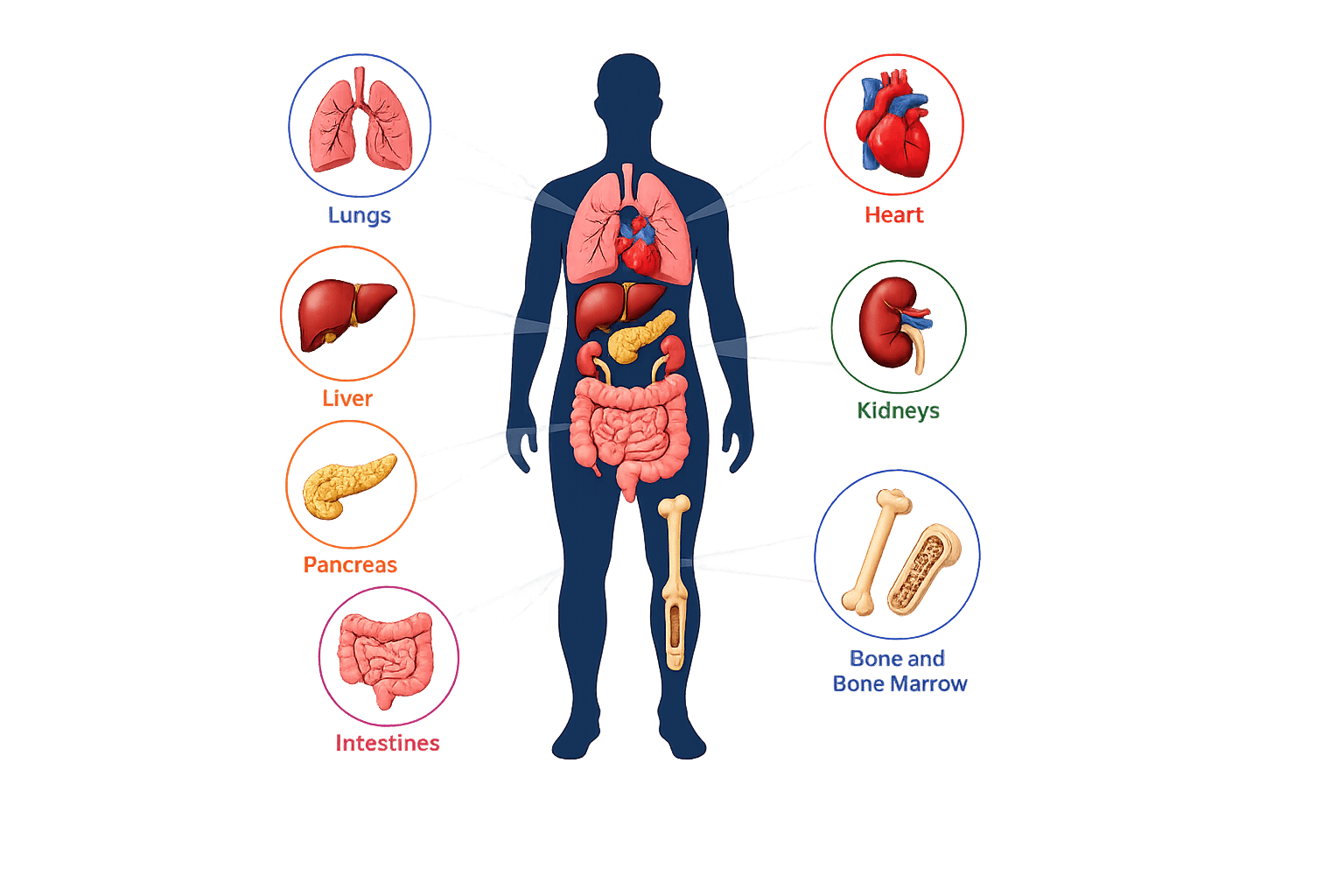
The following organs can be transplanted:
- Heart
- Kidneys
- Liver
- Lungs
- Pancreas
- Intestines
What Are the Benefits of an Organ Transplant?
Your doctor will recommend a transplant only when other treatments have been exhausted and the transplant is expected to improve or save your life. Common situations include:
- Heart transplant for end-stage heart failure
- Lung transplant for cystic fibrosis or emphysema
- Kidney transplant for kidney failure
- Liver transplant for liver failure
- Pancreas transplant for insulin-dependent diabetes
Tissue transplants are also performed, including:
- Tendons and ligaments
- Bone and bone marrow
Your doctor will only consider an organ transplant if other treatments have not worked and they believe it will help you. This is because there are not enough donor organs available for transplant. Receiving an organ transplant comes with risks and can affect your health for life.
Tissue Transplants
Beyond organ transplants, tissue transplants can restore function and quality of life; a corneal transplant may restore sight, a bone or tendon transplant can repair an injury, and a skin transplant may address severe burns.
Bone Marrow Transplants
Bone marrow contains the stem cells that produce blood cells. For patients with blood cancers such as leukaemia, a successful bone marrow transplant can help the body produce healthy blood cells again, and in many cases lead to a long-term cure.
What Does an Organ Transplant Involve?
If you are eligible for a transplant and agree to proceed, you will be placed on a transplant waiting list. A healthcare team will monitor your health and prepare you for surgery. Each organ type requires a different surgical approach, and hospital stay varies accordingly.
After surgery, long-term care is essential and includes:
- Taking immunosuppressant medicines every day
- Regular blood tests and medical check-ups
- Ongoing monitoring at Health1 Ahmedabad to ensure the transplanted organ is functioning well
Organ Donor Eligibility: Who Can Be a Donor?
Organ donation saves lives, and understanding donor eligibility is important for both patients waiting for a donor organ and for families considering donation. At Health1 Ahmedabad, our transplant coordinators guide families through every aspect of the organ donor process with sensitivity and clarity.
Types of Organ Donors
Deceased donors (cadaveric donors): A donor organ can be retrieved from a person declared brain dead. This is the most common source for organs such as the heart, liver, both kidneys, lungs, and pancreas. Health1 Ahmedabad works closely with SOTTO (State Organ and Tissue Transplant Organisation) and NOTTO to facilitate deceased donor organ retrieval in a legal, ethical, and time-sensitive manner.
Living donors: A living person can donate one kidney, a portion of the liver, or a lobe of a lung to a compatible recipient. At Health1, living donor transplants are among the most successful, as the donor organ is fresher and the surgery can be planned in advance. The living donor at Health1 Ahmedabad undergoes a thorough medical, psychological, and legal evaluation before any organ donation proceeds.
Who Is Eligible to Be an Organ Donor?
Almost anyone can be considered as a potential organ donor. Eligibility is assessed case by case by the Health1 transplant team and includes:
- Age: There is no fixed upper age limit for organ donation in India. Organs from donors of all ages are considered, provided they are medically suitable.
- Medical suitability: The specific organs or tissues must be healthy and free from active cancer, serious infection, or conditions that could harm the recipient.
- Consent: In India, the family of the deceased donor must give written consent for organ donation. Living donors must provide free and informed consent, without coercion, as verified independently at Health1 Ahmedabad.
- Compatibility: Blood group and tissue (HLA) matching between the donor organ and the recipient are critical factors assessed by the Health1 laboratory and transplant team before any organ donation proceeds.
- Legal relationship (for living donors): Under THOTA, a living organ donor must be a near relative (spouse, son, daughter, father, mother, brother, or sister) unless authorised by the Authorisation Committee for unrelated donors.
If you are considering becoming an organ donor or if your family member is a potential donor, the transplant coordinators at Health1 Ahmedabad will walk you through every step with transparency and compassion. Health1 is committed to making the organ donor process as clear and as supportive as possible for all families involved.
How Can I Prepare for an Organ Transplant?
While waiting for your transplant, there is much you can do to improve your readiness for surgery and recovery.
Physical Preparation (Prehabilitation)
Engage in physical activity appropriate for your condition
Follow a balanced, nutrient-rich diet
Stop smoking and reduce or eliminate alcohol
Manage existing conditions such as diabetes or hypertension
Emotional Preparation
It is entirely normal to feel anxious before a transplant. Health1’s team includes counsellors who work alongside surgeons and coordinators to support patients and families from the evaluation stage through to long-term recovery.
How Soon Will I Recover?
Recovery time depends on the type of transplant, your overall health, and how well your body responds to the new organ. The table below provides a general guide.
Most transplant recipients can return to work and normal activities within 3 to 6 months after a successful transplant, though this varies by organ type and individual health. At Health1 Ahmedabad, your team will explain what signs to watch for and what follow-up appointments are required before you leave the hospital. Health1 provides structured post-transplant outpatient care to support every step of recovery.
What Complications Can Happen?
Organ transplants carry risks that your team will discuss with you in detail before surgery. General risks include:
- Surgical complications such as bleeding or anaesthesia reactions
- Rejection of the donor organ by the immune system
- Increased susceptibility to infections (due to immunosuppressants)
- A slightly elevated long-term risk of certain cancers
Understanding Organ Rejection
Your immune system may recognise the transplanted organ as foreign and attempt to attack it through a process called rejection. This can be life-threatening, which is why lifelong anti-rejection medication is non-negotiable. Rejection does not always produce obvious symptoms, making regular monitoring essential.
Organ Transplantation and the Law in India
All organ transplants in India are governed by the Transplantation of Human Organs and Tissues Act, 1994 (THOTA). This law ensures ethical practices, prevents commercial organ trade, and protects both organ donors and recipients. Health1 follows all guidelines set by the national transplant authority and state transplant committees. At Health1 Ahmedabad, every donor organ is procured and processed in full compliance with THOTA and NOTTO (National Organ and Tissue Transplant Organisation) protocols.
Why Do Patients Choose Health1, Ahmedabad?
Families across Gujarat and beyond come to Health1 when they or a loved one faces the prospect of an organ transplant. Health1 Ahmedabad’s programme is built around the belief that the best outcomes come from experienced teams, rigorous protocols, and genuine care for the whole family, not just the patient. At Health1, every organ transplant case is reviewed by a multidisciplinary board of transplant surgeons, nephrologists, hepatologists, cardiologists, and coordinators. Health1 Ahmedabad also offers dedicated financial counselling to help families navigate the cost of organ transplantation with clarity and confidence.

Frequently Asked Questions
What is the purpose of the organ transplant?
An organ transplant replaces a damaged or failing organ with a healthy donor organ to improve quality of life, restore normal function, and help patients live longer, healthier lives.
Do organ transplants last for life?
Not always. The success of organ transplants depends on the type of organ, overall health, and medication adherence. Many transplanted organs can function successfully for 10–20 years or longer.
Why does the body reject organ transplants?
The immune system may identify the transplanted organ as foreign and attack it. After an organ transplant, anti-rejection medicines help protect the organ and reduce rejection risk.
Why organs cannot be transplanted from just anybody?
Not every organ donor is compatible. Successful organ transplants require matching blood type, tissue compatibility, medical fitness, and legal approval to reduce complications and rejection risks.
Which organ can never be transplanted?
The brain is the only organ that cannot currently be transplanted. Unlike other organ transplants, brain transplantation is not possible because of its highly complex structure and function.

Testimonials
Our patients’ experiences speak for themselves

Ninama Shivani
8 months ago

Good treatment

Geeta Patel
8 months ago
Consult Dr. Amit patanvadiya Services are good All staff is also nice

Gelabhai Bharwad
8 months ago
Hospital is very good. OPD Reception staff is also very good.

Gopal Jograna
8 months ago
Pt. Name:- bhanubhai Hospital service khub j sari chhe badha staff pan khub Sara chhe doctors ni seva pan khub j sari chhe. Thank you health 1 hospital

moin moin
8 months ago
All staff good

Labana Ravindra
8 months ago
Overall good experience at hospital

Labana Piyush Kumar
8 months ago
Doctor is good Even opd reception staff is also good They guided very well

dr hajuma chaki
8 months ago
Best service and staff

Chunara Kava bhai
8 months ago
Khub saras

Bhudarbhai Patel
8 months ago
Consult Dr kalpesh patel I must say doctor is very good explained well about treatment

Vaishnav Maheshbhai
8 months ago
Good service

Kshatriya Amit
8 months ago
Hospital babu sari che Amaro Anubhav saro rahyo

akbar pathan
8 months ago
Mara father ne ahiya health 1 ma Dr Sunil gurumukhani sir ni under ma Angiography ane Angioplasty ni sarvar thyi ane je mate ame sir ane hospital na Abhari che . Thank you

Gayatri Shah
8 months ago
Excellent experience with Dr. Vrushabh Parikh for my wisdom tooth surgery. The doctor is highly skilled, and the extraction was quick and painless. From the initial consultation, Dr Vrushabh was incredibly patient, explaining the entire procedure and answering all my questions to ease my nerves. Highly recommend him for any dental needs!

Babalidevi Chauhan
8 months ago
Good

Sonu Ahari
8 months ago
Very good treatment in PM-jay card also. Dr. Krunal Patel is very good

Jagdish Jkd
8 months ago
Very good hospital Good experience with all staff

Jhadav jayendra Jhadav
8 months ago
ખુબ સરસ સારવાર મળી છે amne

HARSHAD CHAUHAN
8 months ago
Good facility and service

Rohit Savalia
8 months ago
Very good service & good person

Lali Devimeena
8 months ago
Reception staff is very cooperative Doctor is also good Recommended to others also

Jassu Parmar
8 months ago
Great experience

bhagwati kalasua
8 months ago
consult drsatish kriplani doctor explained well about treatment staff is also good

Kalpesh Kumar
8 months ago
Good services

Dr. VAR
8 months ago
Very good hospital.... Noice service...

naresh soni
8 months ago
I was transferred to ICU of health one hospital from near by hospital in serious condition. I had swine flu and oxygen level was only 70. The expert doctors of yhis hospital saved my Life. Special thanks to Dr Ritesh Patel ICU incharge for his acumen and decision making. I was in ICU for 5 fays and thrre days in room . Discharge on 13/1/26. I am 64 years. This hospital avoided ventilator and treated with bipep instead. The othrr thing is their staff . Very cooperative and at your service any time . Thanks to Health one for saving my life.

makawana balabhai ja...
8 months ago
Service is good

Dr Ravindra Suthar
8 months ago
Dr. Karmay is one of the best doctors I’ve ever seen. They took the time to listen, explained everything clearly, and made me feel completely at ease. You can tell they genuinely care about their patients

Rahul Suthar
8 months ago
I had an exceptionally positive and satisfying experience at Health 1 Hospital. From the moment we entered, the hospital’s cleanliness, organized system, and calm, patient-friendly environment clearly showed the dedication of the entire team toward quality healthcare and patient comfort. I would like to sincerely appreciate Suketu Bhai, Vipul Bhai, and Bhavsingh Bhai for their constant support, humble behavior, and readiness to help at every moment. A special and heartfelt thanks to Dr. Bansree Ma’am for her compassionate nature, careful attention, and truly dedicated treatment approach that gave us great confidence and relief during a difficult time. I would also like to highly recommend Dr. Ritesh Patel Sir from the Critical Care department and Dr. Karmay Shah Sir, Pulmonologist, both of whom are extremely knowledgeable, professional, calm, and responsible in handling patients with the highest level of medical excellence. Their guidance, timely decisions, and reassuring communication made a huge difference in the recovery journey. I strongly recommend Health 1 Hospital to anyone looking for trustworthy treatment, experienced doctors, caring staff, and a safe healing environment. This hospital truly stands as a place where patients are treated with respect, dignity, and genuine human care.

Bansilal Banjara
8 months ago
Bahut achha hospital hai

Damor Dipu
9 months ago
અમને ખૂબ સરસ ટ્રીટમેન્ટ મળી છે

Jayantibhai Damor
9 months ago
Excellent service

Patel Nisarg
9 months ago
I had a good experience in this hospital with all staff working in this hospital

Pinkesh Patel
9 months ago
Had very good experience operation done under doctor Dhruv patel. Very good experience

Kashish Raval
9 months ago
"I had an exceptional experience at ! The staff were friendly, courteous, and professional. Dr. took the time to listen and explain everything clearly. The facilities were clean and modern. Highly recommend!

Usha Sonala
9 months ago
Good services

Deepak Mohkar
9 months ago
Very nice doctors and staff is also humble & polite. Good diagnosis by Doctors.

Ashish shih Padhiyar
9 months ago
Great experience

Gopal Purabiya
9 months ago
Consult Dr. Milind Akhani doctor is good reception staff is also good

Sneha Ninama
9 months ago
Consult doctor Staff is good

Abdul Kadir
9 months ago
Good experience

Kinal Shah
9 months ago
Very good hospital good doctors, good sarvice V r very happy to health 1 hospital shilaj...and 100,.% reliable

Kokila Raval
9 months ago
Good treatment

hitesh vaniya
9 months ago
Great experience i got medicine for 5 days only but very effective treatment given by doctor

Jalpa Parmar
9 months ago
Good

Gopal Patel
9 months ago
Good treatment under pmjay

shailesh patel
9 months ago
Good

Mariam Rashid
9 months ago
The service was wonderful very kind people. Very friendly. Well equipty and attentive to details. Dr Bansari OPD coordinator a wonderdull administrator. She attended to all our needs. Dr Soni oh my God wonderful human being. We were very satisfied.

Abubakar Mrisha
9 months ago
I was treated by Dr Vrushabh Parikh who is very young and intelligent doctor. He treat me very well and he also examined my wife and recommended what she supposed to do. Once again, I recommend those who came for dental clinic you can visit him.

Manish Patel
9 months ago
Good service provided by all staff

Kuldipsinh Chudasama
9 months ago
Good service and carring staff

Gauriben Patel
9 months ago
Excellent service overall. The process was well-organized, communication was clear, and delivery was right on point. Very impressed with miss Mayuri jogawe the professionalism and results.thank you for your great service.

pravin patel
9 months ago
Got treatment under Dr Kishan patel I must say sir ‘s nature is good he explained very well Satisfied with the treatment

Dharam Charan
9 months ago
Good Infrastructure

Dharmendra Ziba
9 months ago
Brst results oriented doctors and trained and humble staff

Shakti Gadhavi
9 months ago
Very good hospital & facilities

net singh
9 months ago
Very good sarvice

Santaben Chavda
9 months ago
Khub saras

Ravi Parmar
9 months ago
Consult dr. Sunil gurmukhani Fully satisfied with the treatment

Jimmy Sutariya
9 months ago
It was a great experience and specially the reason behind the experience was the nicest person i've met there Lucky parmar .

Kartik Parmar
9 months ago
Good experience

સતિશ ભર?...
9 months ago
Good service

Chinu bhai Bharwad
9 months ago
Good

Neeta Sheth
10 months ago
My mom was admitted to Health1 Super Speciality Hospital for a knee procedure under Dr. Mohal Bankers. My stay was only for one day, and everything was handled very smoothly and professionally. I would like to specially thank Ms. Mayuri Jogawe (PRO). She was very helpful, kind, and supportive throughout my admission and discharge. She guided me at every step and made the entire process easy and comfortable. Overall, I had a very good experience with the doctors, staff, and services at Health1 Hospital. I am satisfied with the care I received and would definitely recommend this hospital to others.

Sanjay Patel
10 months ago
I have best experience, Staff are very competitive, Doctors give the time and suggest Good ways for the procedure of all treatment

Prakash Joshi
10 months ago
Got treatment under Dr. Krunal Patel I must say doctor' s nature is very good explained well about treatment Highly recommended to others also

Navshad Belim
10 months ago
Good services provided by hospital

Sankalp Soni
10 months ago
Vipulbhai of the OPD staff is very good and they support through the whole process. Doctor is very good and experienced . Keep doing good work.

Mahendra Singh Bagga
10 months ago
Ďr Kalpesh Patel is very good. He explained all process and disease very well. Opd staff is very cooperative and well experienced

Urmila Raval
10 months ago
Great experience at hospital

Bhavin Baria
10 months ago
Hospital infrastructure is very good. High tech institute for Organ transplantations and Robotic Surgeries along with Hernia Surgeries. Highly equipped Operation theatre with modern robotic systems.

Arjnbhai Bharwad
10 months ago
Good

Munno Soriya
10 months ago
Good service

Mahesh Rathod
10 months ago
Ame ahiya cancer na doctor ne batava aya ta Amne khub saras rite doctor saheb a samjayu Staff pan khub saras che Amaro anubhav saro rahyo

Mariano Jancinto Nha...
10 months ago
Estou muito grato pela vossa atenção a partir do Dr os enfermeiros toda equipe que esteve envolvido neste trabalho vocês são profissionais de saúde do meu coração de alegria de grato pelo vosso trabalho

Ishwarbhai Nayak
10 months ago
Great experience Staff is also good

Nivan Raval
10 months ago
Good experience at hospital

mayur patel
10 months ago
Very cooperative and friendly staff

Meghaji Khan Malek
10 months ago
Have a very good experience at hospital My Father all treatment was done in one day Consult Dr. Bhavin bariya must say he is very good doctor

SKMURUGAN S K MURUGAN
10 months ago
Good

Vidur Chauahan
10 months ago
Hospitals na staff tarffathi saro anubhva rhayo ane Dr PAN Sari sari salah. Api chhe Good experience

Ramanji Thakor
10 months ago
All OPD staff are supportive Doctor is also good

Mangaji r Thakor
10 months ago
Good

Praman lal Verma
10 months ago
Good experience

Vijay Chouhan
10 months ago
Vijaysingh

Pinal Bodar
10 months ago
Must visit this hospital.very nice hospital

Shilpa Khokhariya
10 months ago
Such a good experience and nice nature of all the staff

Katara Bachu
10 months ago
Opd staff is very supportive.

Disha B Sindhav D B ...
10 months ago
best hospital

urvashi palas
10 months ago
Very good experience from staff and all health care workers. Must visit this hospital

Vaishali Gohel
10 months ago
Good hospital and staff

Gandhi Archi
10 months ago
Best hospital ever... good service provide... every staff is good... nice experience

Rohit Verat
10 months ago
Good hospital. Best treatment. Doctors are very supportive

Nayak Satishbhai
10 months ago
Consult Dr. Krunal Patel Good doctor

Jadav Madev
10 months ago
Great experience

Senva Baldev
10 months ago
Good

pradyuman rajvir
10 months ago
My first new experience for multi-speciality HOSPITAL in Ahmedabad. I am PRADYUMAN MAGANLAL RAJVIR Retired Government Servint . I am running 76 years age. For cghs employee health 1 has a all facilities and all specialist doctor IA available Always have a Good experience when I came at hospital

Hansa Rajvir
10 months ago
Today consult Dr. Kirit kubawat for my diabetes I must say he is very good doctor Have a great experience at hospital

Murli Dave
11 months ago
Excellent staff and services… I was glad to get all health checkup at this location.

paresh nagar
11 months ago
Have a good experience at hospital Consult Dr. Kalpesh patel for my mother 's knee pain. I must say doctor is very good