
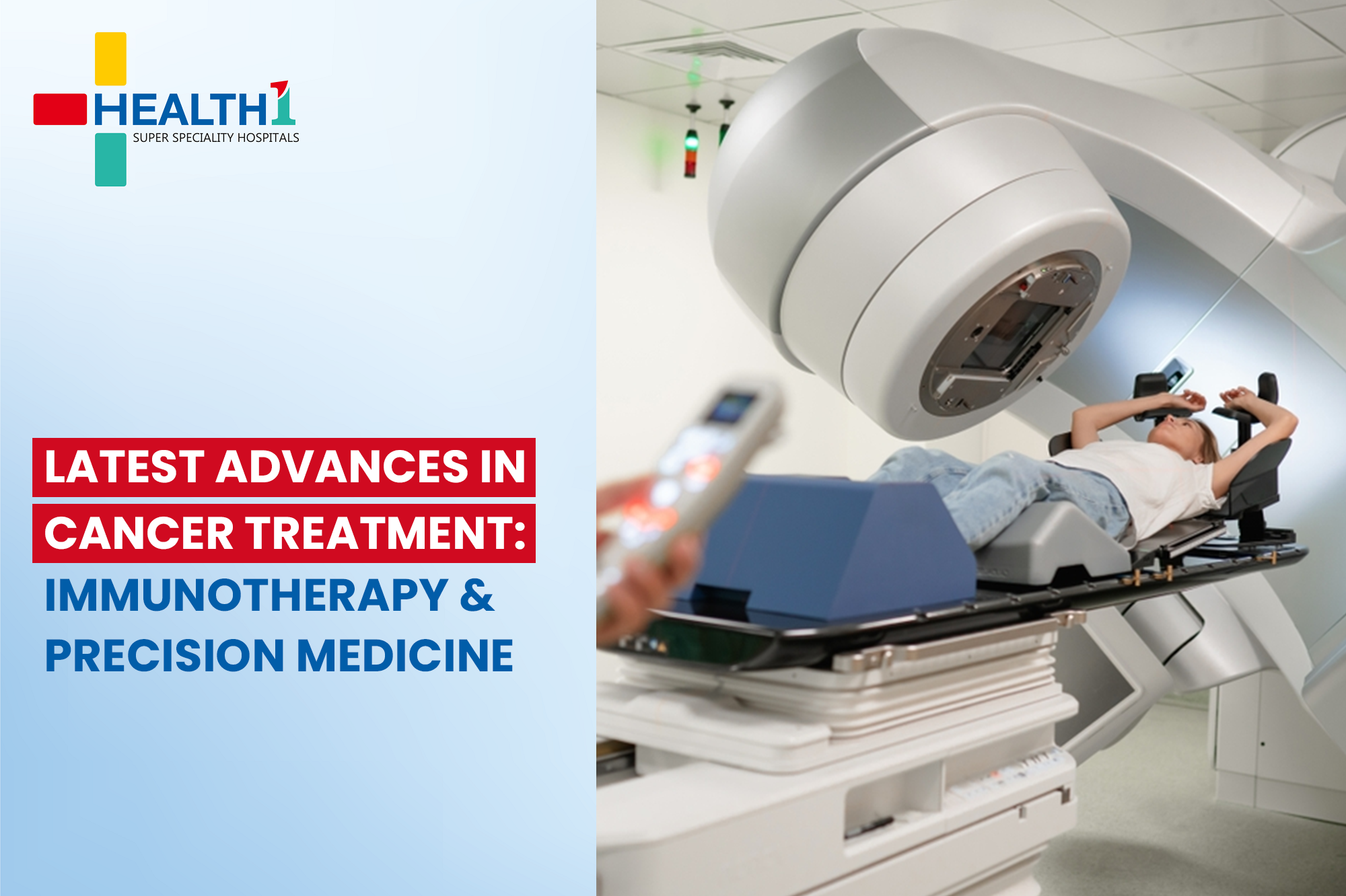
Things have shifted quite a bit with cancer treatment over the last few years. Back then, patients mostly stuck to three basic choices. Surgery, chemotherapy, and radiation were the main ones. Those approaches still do a lot of good for patients. Now though, we have these newer options in cancer care. They tend to be more precise and intelligent. Often they feel safer as well. Among the top ones stand out Immunotherapy and Precision Medicine. People also know the second as Precision Oncology.
Such treatments keep offering real hope for patients these days. They let doctors create plans that match each individual’s needs more closely.
Why Modern Cancer Treatments Are Needed
Traditional cancer treatments have effects on both cancerous and normal cells.
For instance:
- Chemotherapy kills fast-growing cells, but it can affect healthy cells in the hair, stomach, and mouth.
- Radiation targets a specific body part but could affect adjacent tissues.
Because of this, many patients experience side effects like tiredness, hair loss, and weakness.
Modern cancer treatments focus on more precision in the treatment, with fewer side effects and better outcomes.
1. Immunotherapy: Teaching the Body to Fight Cancer
Immunotherapy represents one of the most important advances in cancer care.
It uses your own body’s immune system to find and destroy cancer cells.
How Immunotherapy Works
Your immune system already protects you from germs and diseases. But cancer cells are sneaky-they can hide from your immune system. Immunotherapy allows your immune cells to “see” these hidden cancer cells and attack them.
Forms of Immunotherapy
- Immune checkpoint inhibitors – These allow the “brakes” on the immune cells to be released so that they can attack cancer.
- CAR T-cell therapy-a procedure in which doctors make changes to your blood cells in the lab and then return them to fight the cancer.
- Monoclonal antibodies-special proteins that recognize cancer cells and bind to them directly.
Who Can Receive Immunotherapy?
Patients may be eligible if:
- Their cancer has recurred or spread following previous treatments
- Their tumor expresses certain markers or proteins
- They must be strong enough to undergo an immune-based treatment.
- Examples include cancers like lung cancer, melanoma, kidney cancer, and cancers of the blood, among several others.
Moreover, if you want this treatment locally, almost all cancer hospitals have immunotherapy facilities in Ahmedabad with qualified cancer specialists.
2. Precision Medicine: Treatment Based on Your Genes
Yet another highly advanced cancer treatment technique and area would be Precision Medicine, commonly known as Precision Oncology. Instead of giving the same treatment to everyone, doctors study your genes, tumor type, and body chemistry.
This helps doctors choose the treatment that will work best for you.
How Precision Medicine Works
- Doctors take a sample of the tumor.
- They test it to see its genetic makeup.
- They check which medicines will work for that exact cancer type.
- The patient receives a personalized plan.
Benefits of Precision Oncology
- More accurate treatment
- Fewer side effects
- Faster understanding of what works
- Helps avoid useless treatments
Who Can Receive Precision Medicine? (Eligibility)
It is helpful for patients who:
- Want treatment tailored to their specific cancer type
- Have cancers that keep coming back
- Have rare cancers
- Need a better idea of which medicines will work
Conventional vs Advanced Cancer Treatments
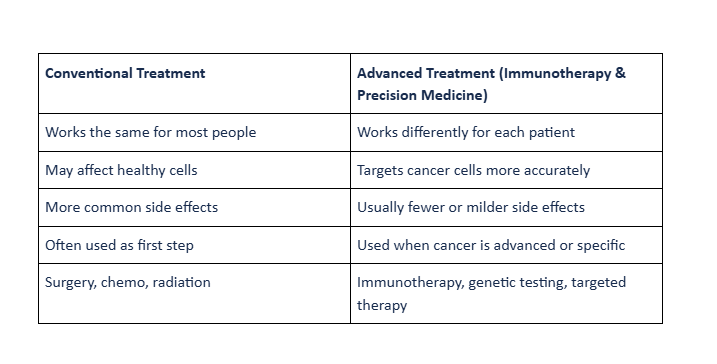
Both approaches are important. Many patients need a mix of traditional and advanced treatment for the best results.
Why These New Treatments Matter
- They provide better survival rates for many cancer types
- They offer hope when older treatments stop working
- They match treatment to the person, not just the disease
- They can be used with surgery, radiation, or chemotherapy for stronger results
Doctors in cancer hospitals today use advanced plans combining surgery, medicines, and immune-based therapies to give patients the best possible outcome.
When Should You Ask About These Treatments?
You can speak to your cancer doctor if:
- Treatment is not working well
- Cancer is spreading
- You want a personalised plan
- You want fewer side effects
- Someone in your family had similar cancer
Your doctor will run tests and guide you on whether Immunotherapy or Precision Oncology is right for you.
Conclusion
Cancer treatment is changing in amazing ways. Immunotherapy works by helping the body take on cancer in a more natural way. Precision Medicine looks at your genes to pick out the right treatment for you. These kinds of modern methods bring fresh hope to people dealing with cancer. They can make recovery better and help improve everyday life too.
You might be interested in learning more about cancer treatment options. You can find ample information about it on our Cancer Care and Surgical Oncology pages, apart from information on robotic surgery in Ahmedabad and best kidney transplant hospitals.
Frequently Asked Questions
What is immunotherapy?
Treatment that helps the body’s own immune system recognise and fight cancer. See the article for details.
What is precision medicine in cancer care?
Also called precision oncology: treatment plans matched to the individual patient and their tumour.
Why are newer cancer treatments needed?
Traditional treatments such as chemotherapy and radiation can also affect healthy cells.