

Book Appointment
Invasive Cardiology
At Health1 Super Speciality Hospitals, we focus and believe in patients receiving top-quality care and support which cures their Cardiac problems and disorders. The Invasive Cardiology procedures involve procedures in which the body is invaded (entered) by puncturing or cutting (incising) the skin or by entering instruments. We provide advanced angiography in Ahmedabad performed by the best Cardiac experts.
Scope Of Services :
- 1. Coronary Interventions :
- Coronary Angiography
- Coronary Angioplasty and Stenting
- Primary Angioplasty in Myocardial Infarction (PAMI)
- Emergency Percutaneous Transluminal Coronary Angioplasty (PTCA)
- Rotational Atherectomy
- 2. Peripheral Interventions :
- Renal and Carotid Angiography
- Renal and Carotid Angioplasty
- Endovascular Repair of Aortic Aneurysm and Dissection
- 3. Pediatric Intervention :
- ASD- Atrial Septal Defect
- VSD- Ventricular Septal Defect
- PDA- Patent Ductus Arteriosus
- 4. Structural Heart Disease :
- Valvuloplasty
- 5. Balloon valvuloplasties :
- BMV- Balloon Mitral Valve
- BAV- Bicuspid Aortic Valve
- 6. Balloon angioplasties and peripheral vascular stenting (coronary, carotid, renal, mesenteric, iliac, etc.)
- 7. Tetralogy of Fallot (TOF)


Our Healthcare Experts
Specialist Doctor

Qualifications :
M.D. General Medicine, D.M. Cardiology, D.N.B. Cardiology, MNAMS
Specialization :
Complex Cardiology procedures, Interventional cardiology , Complex Coronary Interventions, Peripheral Vascular Interventions, venous Disorders
Location :

Qualifications :
M.D. General Medicine, D.M. Cardiology, FSCAI, AFESC
Specialization :
Complex Coronary Interventions, Structural Cardiac Interventions, Device Closure, Peripheral Interventions , Balloon Valvotomy, Carotid Artery Stenting, Renal Artery Stenting, Pacemaker, AICD Implantation
Location :

Qualifications :
M.D. General Medicine, D.M. Cardiology
Specialization :
Inerventional Cardiology , Coronary Angiography, Angioplasty and Stenting, Complex Coronary Interventionist, Peripheral Vascular Interventions, Balloon valvuloplasties, Diagnostic Structural Heart Disease Cath Procedures, Pacemaker Insertion, AICD Implantation, Retrieval of Embolized Intravascular foreign bodies, IABP Insertion, IVC Filter Implantation, Adult and Pediatric Echocardiography
Location :

Qualifications :
M.D., D.M. Cardiology
Specialization :
Complex Coronary Interventions, Structural Cardiac Interventions, Device Closure , Pacemaker Implantation, AICD Implantation, CRT Device
Location :
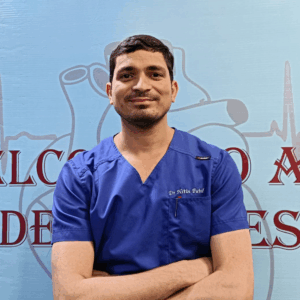
Qualifications :
M.D., D.M. Cardiology
Specialization :
Complex Coronary Interventions. Structural Cardiac Interventions. Peripheral Interventions Pacemaker implantation Pediatric cardiac Interventions. (2 D-Echo) , Structural Heart Intervention,pediatric Cardiology, Complex Coronary Interventions, Structural Cardiac Interventions, Peripheral Interventions, Pacemaker implantation, Pediatric cardiac Interventions, Echocardiography
Location :

Qualifications :
M.D. Pediatrics(Gold Medialist), FPC
Specialization :
Paediatric, Cardiology, Pediatric Cardiac Interventions, Echocardiography
Location :

FAQs for Invasive Cardiology
What is invasive cardiology?
Invasive cardiology is a branch of cardiology that involves procedures where instruments are inserted into the body through small incisions or punctures to diagnose and treat heart conditions such as blocked arteries and structural heart disease.
What procedures are included in invasive cardiology?
Invasive cardiology includes procedures like coronary angiography, angioplasty and stenting, primary angioplasty (PAMI), PTCA, and rotational atherectomy. It also covers peripheral interventions and structural heart treatments.
What is angiography and why is it done?
Angiography is a diagnostic procedure used to visualize blood vessels and detect blockages in arteries. It helps identify heart problems and guides further treatment such as angioplasty or other cardiac procedures.
What is angioplasty and how does it work?
Angioplasty is a minimally invasive procedure used to open blocked arteries by inserting a balloon and placing a stent. It improves blood flow to the heart and is commonly used in conditions like coronary artery disease.
What is the difference between invasive and non-invasive cardiology?
Invasive cardiology involves procedures like angiography and angioplasty that require entering the body, while non-invasive cardiology uses tests like ECG and echocardiography without any incisions for diagnosis and monitoring.
When is invasive cardiology required?
Invasive cardiology is required when non-invasive tests indicate serious heart problems such as blocked arteries, heart attack, or structural defects that need immediate intervention like angioplasty or stenting.
Is invasive cardiology safe?
Yes, invasive cardiology procedures are generally safe when performed by experienced specialists using advanced technology. These procedures are widely used for treating heart conditions with high success rates and controlled risks.
What are peripheral interventions in invasive cardiology?
Peripheral interventions include procedures like renal angiography, carotid angioplasty, and vascular stenting. These are used to treat blood vessel problems outside the heart, improving circulation and preventing complications.
What is structural heart disease treatment in invasive cardiology?
Structural heart disease treatment includes procedures like valvuloplasty and device closure for defects such as ASD, VSD, and PDA. These procedures correct abnormalities in heart structure without open-heart surgery.
How does invasive cardiology help during a heart attack?
Invasive cardiology plays a critical role during a heart attack through emergency procedures like primary angioplasty (PAMI). It quickly restores blood flow to the heart, reducing damage and improving survival outcomes.
OPD Timing
