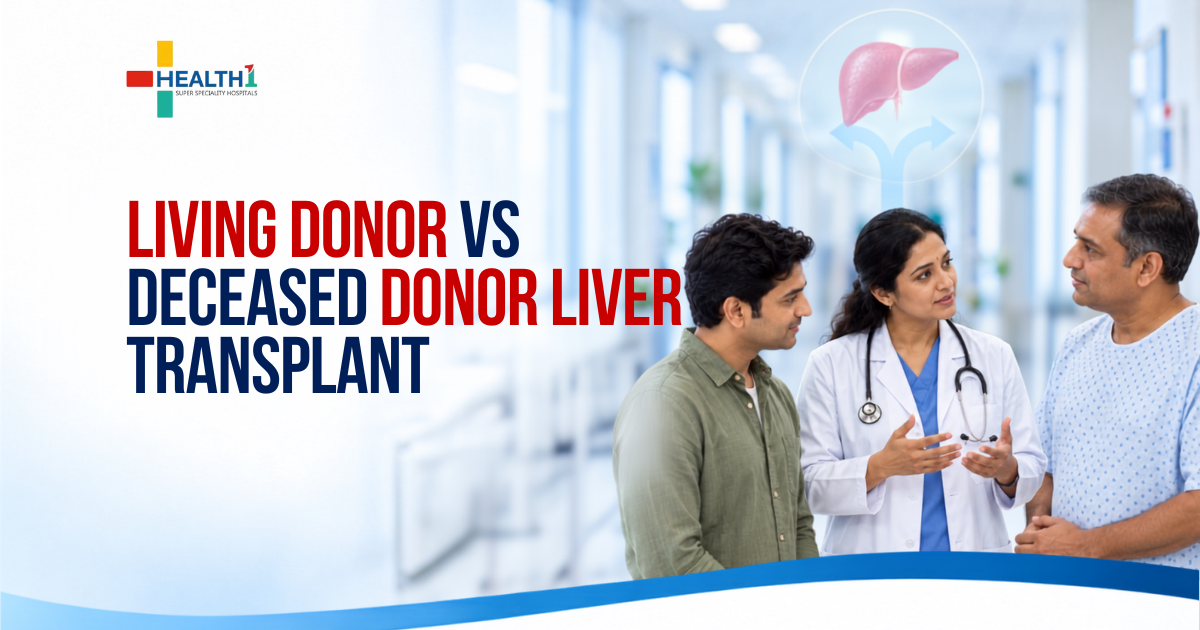
One of the first decisions a liver transplant patient and their family face isn’t about the surgery itself it’s about where the donor liver will come from. At Health1, Ahmedabad, patients are evaluated for both living donor liver transplant (LDLT) and deceased donor liver transplant (DDLT) pathways, and the transplant team helps families understand which is realistic for their situation.
What LDLT and DDLT Actually Mean
Living donor liver transplant (LDLT): A healthy, willing relative or approved donor gives a portion of their liver, which regenerates in both the donor and recipient over several weeks. This is the most common transplant pathway in India, largely because deceased donor organs are in short supply relative to need.
Deceased donor liver transplant (DDLT): The full liver (or a portion, if split between two recipients) comes from a brain-dead donor, allocated through the state/national organ-sharing waitlist based on medical urgency (MELD score) and blood group match.
LDLT vs DDLT: Side-by-Side Comparison
| Factor | Living Donor Liver Transplant (LDLT) | Deceased Donor Liver Transplant (DDLT) |
|---|---|---|
| Wait time | Days to weeks, once the donor is approved | Weeks to months, depending on the waitlist and organ availability |
| Number of surgeries | Two—one for the donor and one for the recipient | One—recipient only |
| Donor risk | The donor undergoes major surgery and generally requires 6–8 weeks of recovery | No living-donor surgical risk |
| Planning | Can be scheduled in advance | Unpredictable; the recipient must be ready when a suitable organ becomes available |
| Legal process in India | Requires review and approval under applicable transplant laws; additional authorization is generally required for unrelated donors | Governed by the state or regional organ-allocation system |
| Best suited for | Patients with a willing, medically fit and compatible living donor | Patients without a suitable living donor or those requiring an urgent transplant |
Who Can Be a Living Donor?
A potential living donor at Health1 goes through a structured evaluation before approval:
- Blood group compatibility with the recipient (or ABO-incompatible protocols in select cases)
- General health screening – liver function, imaging to assess liver volume and anatomy, cardiac and psychological fitness
- Legal clearance – under Indian law, related donors (spouse, parent, sibling, child) go through a simpler authorization process; unrelated donors require additional committee review to rule out organ trade
- Informed consent – a clear explanation of surgical risk, since the donor is a healthy person undergoing surgery for someone else’s benefit
The Deceased Donor Waitlist in India
For patients without a living donor option, Health1‘s transplant coordinators register eligible patients on the state organ allocation list. Priority is generally based on:
- MELD score (a measure of liver disease severity)
- Blood group match
- Time on the waitlist, as a tiebreaker among similarly urgent cases
Because deceased donor timing is unpredictable, patients on this pathway are typically asked to remain within reach of Ahmedabad (or return quickly) once listed.
How Health1 Helps Families Decide
Rather than presenting LDLT and DDLT as a simple either/or, Health1’s transplant team runs parallel evaluation where appropriate assessing whether a family member is a viable living donor while simultaneously registering the patient on the deceased donor list, so families aren’t left waiting on one pathway alone. This is especially relevant for international patients, who may not have a same-country donor readily available and need clarity early on which route is realistic for their timeline.

Frequently Asked Questions
Is living donor liver transplant as safe as deceased donor transplant for the recipient?
Both pathways have well-established outcomes when performed at accredited transplant centres; the choice usually comes down to donor availability and how urgently the recipient needs the transplant, not a safety gap between the two.
Can a friend or unrelated person be a living liver donor in India?
Yes, but unrelated donors require additional legal review by a hospital authorization committee to confirm the donation is voluntary and not commercial, per Indian transplant law.
How long does the donor take to recover after LDLT?
Most living liver donors are hospitalized for about a week and return to normal activity within 6-8 weeks, with the liver regenerating to near-full volume in both donor and recipient within a few months.
What happens if no living donor is available and the deceased donor wait is long?
Patients are prioritized on the waitlist by medical urgency (MELD score); Health1’s team also discusses interim medical management to keep the patient stable while waiting.
Can international patients register for the deceased donor list in India?
Deceased donor allocation in India is generally governed by state/national policy and can have restrictions for non-resident patients Health1’s coordinators can clarify current eligibility for your specific situation during evaluation.

Testimonials
Our patients’ experiences speak for themselves

Ninama Shivani
8 months ago

Good treatment

Geeta Patel
8 months ago
Consult Dr. Amit patanvadiya Services are good All staff is also nice

Gelabhai Bharwad
8 months ago
Hospital is very good. OPD Reception staff is also very good.

Gopal Jograna
8 months ago
Pt. Name:- bhanubhai Hospital service khub j sari chhe badha staff pan khub Sara chhe doctors ni seva pan khub j sari chhe. Thank you health 1 hospital

moin moin
8 months ago
All staff good

Labana Ravindra
8 months ago
Overall good experience at hospital

Labana Piyush Kumar
8 months ago
Doctor is good Even opd reception staff is also good They guided very well

dr hajuma chaki
8 months ago
Best service and staff

Chunara Kava bhai
8 months ago
Khub saras

Bhudarbhai Patel
8 months ago
Consult Dr kalpesh patel I must say doctor is very good explained well about treatment

Vaishnav Maheshbhai
8 months ago
Good service

Kshatriya Amit
8 months ago
Hospital babu sari che Amaro Anubhav saro rahyo

akbar pathan
8 months ago
Mara father ne ahiya health 1 ma Dr Sunil gurumukhani sir ni under ma Angiography ane Angioplasty ni sarvar thyi ane je mate ame sir ane hospital na Abhari che . Thank you

Gayatri Shah
8 months ago
Excellent experience with Dr. Vrushabh Parikh for my wisdom tooth surgery. The doctor is highly skilled, and the extraction was quick and painless. From the initial consultation, Dr Vrushabh was incredibly patient, explaining the entire procedure and answering all my questions to ease my nerves. Highly recommend him for any dental needs!

Babalidevi Chauhan
8 months ago
Good

Sonu Ahari
8 months ago
Very good treatment in PM-jay card also. Dr. Krunal Patel is very good

Jagdish Jkd
8 months ago
Very good hospital Good experience with all staff

Jhadav jayendra Jhadav
8 months ago
ખુબ સરસ સારવાર મળી છે amne

HARSHAD CHAUHAN
8 months ago
Good facility and service

Rohit Savalia
8 months ago
Very good service & good person

Lali Devimeena
8 months ago
Reception staff is very cooperative Doctor is also good Recommended to others also

Jassu Parmar
8 months ago
Great experience

bhagwati kalasua
8 months ago
consult drsatish kriplani doctor explained well about treatment staff is also good

Kalpesh Kumar
8 months ago
Good services

Dr. VAR
8 months ago
Very good hospital.... Noice service...

naresh soni
8 months ago
I was transferred to ICU of health one hospital from near by hospital in serious condition. I had swine flu and oxygen level was only 70. The expert doctors of yhis hospital saved my Life. Special thanks to Dr Ritesh Patel ICU incharge for his acumen and decision making. I was in ICU for 5 fays and thrre days in room . Discharge on 13/1/26. I am 64 years. This hospital avoided ventilator and treated with bipep instead. The othrr thing is their staff . Very cooperative and at your service any time . Thanks to Health one for saving my life.

makawana balabhai ja...
8 months ago
Service is good

Dr Ravindra Suthar
8 months ago
Dr. Karmay is one of the best doctors I’ve ever seen. They took the time to listen, explained everything clearly, and made me feel completely at ease. You can tell they genuinely care about their patients

Rahul Suthar
8 months ago
I had an exceptionally positive and satisfying experience at Health 1 Hospital. From the moment we entered, the hospital’s cleanliness, organized system, and calm, patient-friendly environment clearly showed the dedication of the entire team toward quality healthcare and patient comfort. I would like to sincerely appreciate Suketu Bhai, Vipul Bhai, and Bhavsingh Bhai for their constant support, humble behavior, and readiness to help at every moment. A special and heartfelt thanks to Dr. Bansree Ma’am for her compassionate nature, careful attention, and truly dedicated treatment approach that gave us great confidence and relief during a difficult time. I would also like to highly recommend Dr. Ritesh Patel Sir from the Critical Care department and Dr. Karmay Shah Sir, Pulmonologist, both of whom are extremely knowledgeable, professional, calm, and responsible in handling patients with the highest level of medical excellence. Their guidance, timely decisions, and reassuring communication made a huge difference in the recovery journey. I strongly recommend Health 1 Hospital to anyone looking for trustworthy treatment, experienced doctors, caring staff, and a safe healing environment. This hospital truly stands as a place where patients are treated with respect, dignity, and genuine human care.

Bansilal Banjara
8 months ago
Bahut achha hospital hai

Damor Dipu
9 months ago
અમને ખૂબ સરસ ટ્રીટમેન્ટ મળી છે

Jayantibhai Damor
9 months ago
Excellent service

Patel Nisarg
9 months ago
I had a good experience in this hospital with all staff working in this hospital

Pinkesh Patel
9 months ago
Had very good experience operation done under doctor Dhruv patel. Very good experience

Kashish Raval
9 months ago
"I had an exceptional experience at ! The staff were friendly, courteous, and professional. Dr. took the time to listen and explain everything clearly. The facilities were clean and modern. Highly recommend!

Usha Sonala
9 months ago
Good services

Deepak Mohkar
9 months ago
Very nice doctors and staff is also humble & polite. Good diagnosis by Doctors.

Ashish shih Padhiyar
9 months ago
Great experience

Gopal Purabiya
9 months ago
Consult Dr. Milind Akhani doctor is good reception staff is also good

Sneha Ninama
9 months ago
Consult doctor Staff is good

Abdul Kadir
9 months ago
Good experience

Kinal Shah
9 months ago
Very good hospital good doctors, good sarvice V r very happy to health 1 hospital shilaj...and 100,.% reliable

Kokila Raval
9 months ago
Good treatment

hitesh vaniya
9 months ago
Great experience i got medicine for 5 days only but very effective treatment given by doctor

Jalpa Parmar
9 months ago
Good

Gopal Patel
9 months ago
Good treatment under pmjay

shailesh patel
9 months ago
Good

Mariam Rashid
9 months ago
The service was wonderful very kind people. Very friendly. Well equipty and attentive to details. Dr Bansari OPD coordinator a wonderdull administrator. She attended to all our needs. Dr Soni oh my God wonderful human being. We were very satisfied.

Abubakar Mrisha
9 months ago
I was treated by Dr Vrushabh Parikh who is very young and intelligent doctor. He treat me very well and he also examined my wife and recommended what she supposed to do. Once again, I recommend those who came for dental clinic you can visit him.

Manish Patel
9 months ago
Good service provided by all staff

Kuldipsinh Chudasama
9 months ago
Good service and carring staff

Gauriben Patel
9 months ago
Excellent service overall. The process was well-organized, communication was clear, and delivery was right on point. Very impressed with miss Mayuri jogawe the professionalism and results.thank you for your great service.

pravin patel
9 months ago
Got treatment under Dr Kishan patel I must say sir ‘s nature is good he explained very well Satisfied with the treatment

Dharam Charan
9 months ago
Good Infrastructure

Dharmendra Ziba
9 months ago
Brst results oriented doctors and trained and humble staff

Shakti Gadhavi
9 months ago
Very good hospital & facilities

net singh
9 months ago
Very good sarvice

Santaben Chavda
9 months ago
Khub saras

Ravi Parmar
9 months ago
Consult dr. Sunil gurmukhani Fully satisfied with the treatment

Jimmy Sutariya
9 months ago
It was a great experience and specially the reason behind the experience was the nicest person i've met there Lucky parmar .

Kartik Parmar
9 months ago
Good experience

સતિશ ભર?...
9 months ago
Good service

Chinu bhai Bharwad
9 months ago
Good

Neeta Sheth
10 months ago
My mom was admitted to Health1 Super Speciality Hospital for a knee procedure under Dr. Mohal Bankers. My stay was only for one day, and everything was handled very smoothly and professionally. I would like to specially thank Ms. Mayuri Jogawe (PRO). She was very helpful, kind, and supportive throughout my admission and discharge. She guided me at every step and made the entire process easy and comfortable. Overall, I had a very good experience with the doctors, staff, and services at Health1 Hospital. I am satisfied with the care I received and would definitely recommend this hospital to others.

Sanjay Patel
10 months ago
I have best experience, Staff are very competitive, Doctors give the time and suggest Good ways for the procedure of all treatment

Prakash Joshi
10 months ago
Got treatment under Dr. Krunal Patel I must say doctor' s nature is very good explained well about treatment Highly recommended to others also

Navshad Belim
10 months ago
Good services provided by hospital

Sankalp Soni
10 months ago
Vipulbhai of the OPD staff is very good and they support through the whole process. Doctor is very good and experienced . Keep doing good work.

Mahendra Singh Bagga
10 months ago
Ďr Kalpesh Patel is very good. He explained all process and disease very well. Opd staff is very cooperative and well experienced

Urmila Raval
10 months ago
Great experience at hospital

Bhavin Baria
10 months ago
Hospital infrastructure is very good. High tech institute for Organ transplantations and Robotic Surgeries along with Hernia Surgeries. Highly equipped Operation theatre with modern robotic systems.

Arjnbhai Bharwad
10 months ago
Good

Munno Soriya
10 months ago
Good service

Mahesh Rathod
10 months ago
Ame ahiya cancer na doctor ne batava aya ta Amne khub saras rite doctor saheb a samjayu Staff pan khub saras che Amaro anubhav saro rahyo

Mariano Jancinto Nha...
10 months ago
Estou muito grato pela vossa atenção a partir do Dr os enfermeiros toda equipe que esteve envolvido neste trabalho vocês são profissionais de saúde do meu coração de alegria de grato pelo vosso trabalho

Ishwarbhai Nayak
10 months ago
Great experience Staff is also good

Nivan Raval
10 months ago
Good experience at hospital

mayur patel
10 months ago
Very cooperative and friendly staff

Meghaji Khan Malek
10 months ago
Have a very good experience at hospital My Father all treatment was done in one day Consult Dr. Bhavin bariya must say he is very good doctor

SKMURUGAN S K MURUGAN
10 months ago
Good

Vidur Chauahan
10 months ago
Hospitals na staff tarffathi saro anubhva rhayo ane Dr PAN Sari sari salah. Api chhe Good experience

Ramanji Thakor
10 months ago
All OPD staff are supportive Doctor is also good

Mangaji r Thakor
10 months ago
Good

Praman lal Verma
10 months ago
Good experience

Vijay Chouhan
10 months ago
Vijaysingh

Pinal Bodar
10 months ago
Must visit this hospital.very nice hospital

Shilpa Khokhariya
10 months ago
Such a good experience and nice nature of all the staff

Katara Bachu
10 months ago
Opd staff is very supportive.

Disha B Sindhav D B ...
10 months ago
best hospital

urvashi palas
10 months ago
Very good experience from staff and all health care workers. Must visit this hospital

Vaishali Gohel
10 months ago
Good hospital and staff

Gandhi Archi
10 months ago
Best hospital ever... good service provide... every staff is good... nice experience

Rohit Verat
10 months ago
Good hospital. Best treatment. Doctors are very supportive

Nayak Satishbhai
10 months ago
Consult Dr. Krunal Patel Good doctor

Jadav Madev
10 months ago
Great experience

Senva Baldev
10 months ago
Good

pradyuman rajvir
10 months ago
My first new experience for multi-speciality HOSPITAL in Ahmedabad. I am PRADYUMAN MAGANLAL RAJVIR Retired Government Servint . I am running 76 years age. For cghs employee health 1 has a all facilities and all specialist doctor IA available Always have a Good experience when I came at hospital

Hansa Rajvir
10 months ago
Today consult Dr. Kirit kubawat for my diabetes I must say he is very good doctor Have a great experience at hospital

Murli Dave
11 months ago
Excellent staff and services… I was glad to get all health checkup at this location.

paresh nagar
11 months ago
Have a good experience at hospital Consult Dr. Kalpesh patel for my mother 's knee pain. I must say doctor is very good